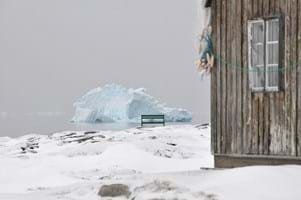


Areas for cabins, holiday homes, etc. are characterized by being zoned for holiday cabins and summer homes that do not have the status of year-round residence. In the sub-areas, tourist cabins, hunting cabins and survival cabins can be established to a limited extent, as long as the number does not change the sub-area's overall use as an area for holiday cabins and summer homes, etc.
Facilities may be established that can be used for activities of a minor commercial nature, such as drying racks, smoking ovens, gardening, etc., as long as this is for personal use. These facilities must be established in close proximity to the individual cabin.
The sub-area's general provisions can be seen below.
Provisions and sub-areas
The overall provisions for the individual sub-area are the basis for the municipality's issuance of land allocations and building permits.

General provisions
The general provisions apply to all sub-areas of the municipality in urban, rural and open countryside. The provisions are general and do not take into account the local conditions in the sub-areas.
In K-areas, a distinction is made between five types of cabins: Leisure cabins, summer houses, tourist cabins, camp schools and hunting and survival cabins:
A holiday cottage is a cottage intended for short-term stays. Holiday cottages can be used privately and may not have a floor area of more than 20 m2. A building permit is not required to construct a holiday cottage.
A summer house is a holiday cottage for private use. Summer houses must have a floor area greater than 20 m 2 and a maximum of 60 m 2. A building permit is required to construct summer houses in accordance with current building legislation.
Tourist cabins/hotels are cabins that are used or rented out commercially. Rental can typically be to tourists or local citizens. Tourist cabins must have a floor area of a maximum of 60 m 2. There are no guidelines for the size of tourist cabins. Tourist cabins require a building permit in accordance with current building legislation.
Camp schools are buildings used by the municipality, for example by primary schools, leisure clubs or public institutions. Camp schools are owned by the municipality or by an organisation. In K-areas, camp schools may have a floor area of a maximum of 80 m 2. Construction requires a building permit in accordance with current building legislation.
Hunting and survival cabins are small cabins that are publicly accessible for short-term stays for traditional hunting, trapping, fishing, sheep farming and leisure activities. Most often, these cabins will be established by the municipality or an organization. There are no guidelines for the size of hunting and survival cabins, but these are basically smaller cabins. Construction does not require a building permit according to current building legislation.
The K-areas are divided into:
- K1: Cabin and summer house areas
- K2: Abandoned settlements
The following applies to the different cabin types:
|
|
Access conditions |
Size |
Height |
Building |
Area |
|
Recreational cabin |
Private |
max. 20 m2 |
2 floors |
÷ Building permit |
+ Area allocation |
|
Holiday home |
Private |
max. 60 m2 |
2 floors |
+ Building permit |
+ Area allocation |
|
Tourist cabin |
For rent |
max. 60 m2 |
2 floors |
+ Building permit |
+ Area allocation |
|
Camp school |
For rent |
max. 80 m2 |
2 floors |
+ Building permit |
+ Area allocation |
|
Survival |
Publicly available |
No provisions |
1 floor |
÷ Building permit |
+ Area allocation |
* In cottage areas, it is possible for buildings to be built on 2 floors, provided that there is a ground floor and a utilized attic.
Solid waste must either be incinerated or taken away. The incineration must be carried out in such a way that it does not pose a risk to surrounding buildings or the natural environment or is a nuisance to others.
For the disposal of human waste, bucket toilets may be used, provided that the contents are discharged directly into the sea, composted, or otherwise disposed of in a manner that does not cause nuisance to others or harm to the surrounding environment. For existing buildings equipped with flush toilets, wastewater shall be disposed of in a corresponding manner.
K1: Cabin and summer house areas
The characteristic of cabin and summer house areas is that the individual cabins are located relatively freely and that no form of "urban development" should occur. Therefore, all activity related to land use must be associated with the individual cabins.
Cabins must be built with a minimum distance of 60 meters to the nearest neighboring cabin. The Municipal Council may adopt other larger minimum distances in connection with the preparation of detailed regulations. If, for example, minimum distances of 100 or 200 meters are desired between cabins based on local conditions, this can be applied. Holiday cabins and summer houses may be built with a maximum of 2 floors, which corresponds to one floor with a utilized attic. Foundations may have a maximum height of one meter at the lowest base. The buildings must be maintained on an ongoing basis so that they do not unnecessarily detract from the surroundings.
No roads, lanes, paths, jetties or shared technical supply systems may be constructed in areas for holiday cottages and summer houses, etc. Technical supply systems may only be established as small independent systems in direct connection with the individual cottage. These may, for example, be generators and solar cells or other systems for energy production. Furthermore, all smaller systems may only be established so that when used they do not cause a nuisance to neighbours with noise, smoke, smell, vibrations or in any other way.
K2: Abandoned settlements
Disused settlements are generally designated as K-areas. Cabins can be placed with a minimum distance of 30 meters. Leisure cabins and summer houses may be built with a maximum of 2 floors, which corresponds to one floor with a used attic. Camp schools may be built with 2 floors. Foundations may have a maximum height of one meter at the lowest base. The buildings must be maintained on an ongoing basis so that they do not unnecessarily detract from the surroundings.
In abandoned settlements, the existing systems of roads, lanes, paths and jetties can be maintained and expanded. Technical supply systems may only be established as small independent systems in direct connection with the individual cabin. These may include generators, solar cells or other systems for energy production. Furthermore, all smaller systems may only be established so that when used they do not cause a nuisance to neighbours with noise, smoke, smell, vibrations or in any other way.
Distance requirements to coastline and other habitat types
According to the Danish Parliament Act No. 29 of 18 December 2003 on nature protection, no buildings may be built, no planting, cultivation, drainage or other changes to the terrain may be made within a distance of 100 meters from salt lakes and saline lakes, trout rivers, hot springs and the coastline.
Recreational and tourist cabins can only be located closer than 100 meters from the mentioned habitat types if this is determined in a municipal plan supplement with detailed provisions for the sub-area in question.
The Government of Greenland may, in special cases, exempt from the above distance requirements.