

Schools, high schools and higher education
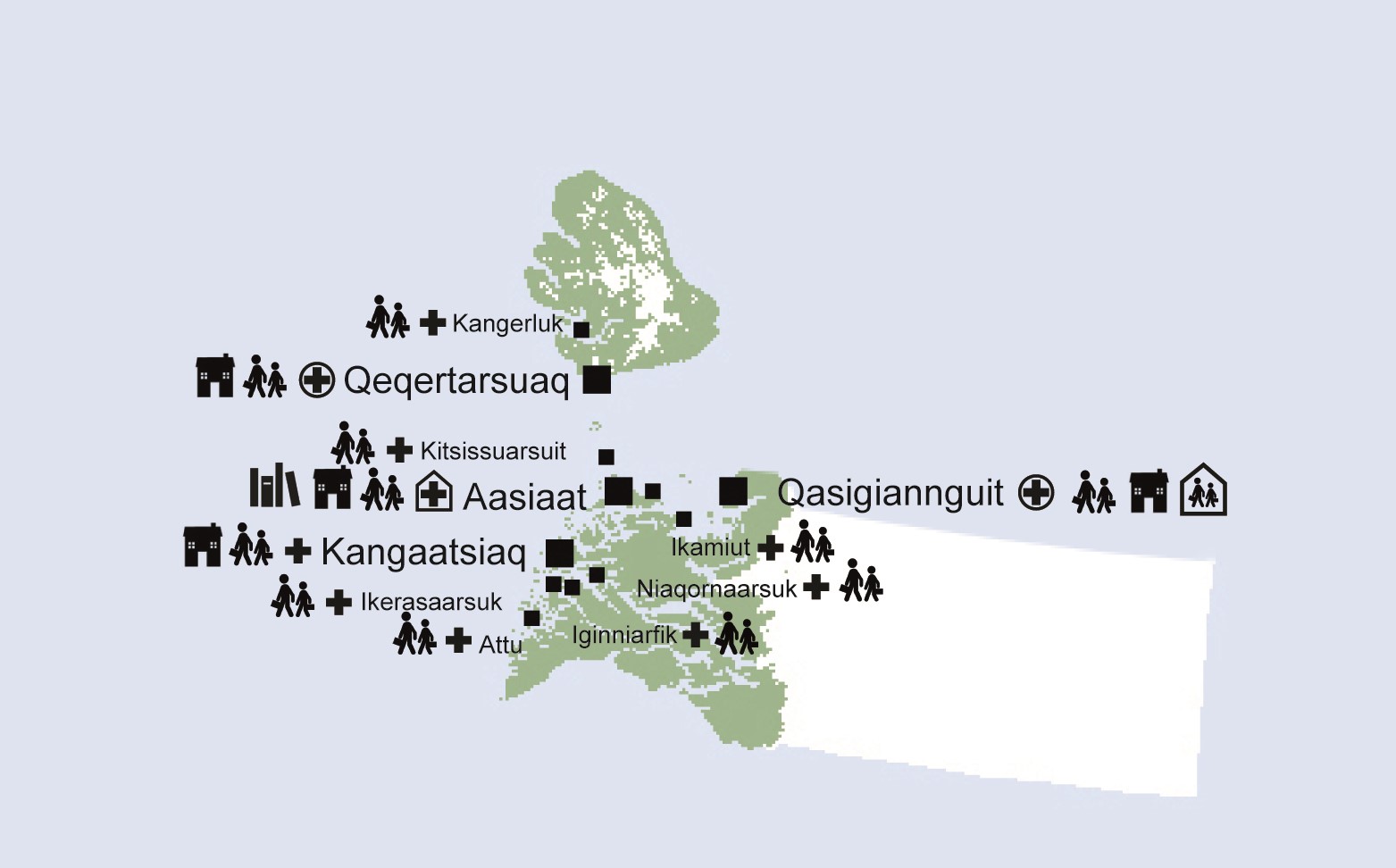
There are a total of 13 primary schools in Municipality Qeqertalik including the school for the disabled in Aasiaat (Ado Lyngep Atuarfia). The schools in the cities have grades 1 to 10, while the smaller schools in the settlements have grades 1 to 7. The primary challenges in the primary school area are low student numbers, especially in the village schools, and an urgent need for renovation.
In Qasigiannguit there is also a secondary school – Villads Villadsen-ip secondary school – with space for 80 students. The secondary school offers three subjects: Adventure/Outdoor, Design/Art and Communication/IT. The school experiences good results in terms of getting students further in the education system – just over 70% of the students subsequently choose higher education.
Nordgrønlands Gymnasium or GUX Aasiaat, is Greenland's northernmost high school and thus also one of the world's northernmost high schools. The school is located in Aasiaat, but the students come from all over North Greenland and the catchment area stretches 1150 kilometers, from Kangaatsiaq in the south to Qaanaaq in the north, and therefore almost all of our approximately 400 students live in one of the school's dormitories around the city. Annually, approximately 90 students from all over North Greenland take the final exam from the high school.
Each of the 4 towns in Municipality Qeqertalik has a local Piareersarfik, which offers a 1-year FA school stay for upskilling/preparation as a basis for a professional job or higher education.
Through municipal planning, the necessary areas must be secured for, for example, expansions and improvements to the facilities at the municipality's schools and educational institutions. Municipality Qeqertalik's 8 towns must continue to be strengthened as centers for education, but efforts in the upcoming planning period will primarily be linked to renovation and minor expansions of the existing schools and educational institutions. It is assessed that there is sufficient space to secure this in the relevant sub-areas of the municipal plan.
Health
Municipality Qeqertalik belongs to the Health Region 'Disko', which was established upon implementation of the health reform in January 2011. In each region there is a regional hospital, which has overall responsibility for health services in the region, including at the affiliated hospitals and health centers as well as in the smaller nursing stations. The municipality's regional hospitals are located in Ilulissat and Aasiaat, respectively, while the other 3 cities have either a health center, cf. the main structure map.
The health regions also include dental care, which is covered by one or more dentists in each district. In Kaangatsiaq and Qaanaaq, dental services are only available part of the year.
The health reform of 2011 also introduced telemedicine as a new service for citizens in, among other things, more remote areas. There are varying experiences with the use of telemedicine, but with the appointment of a telemedicine consultant in 2013, it has been decided to continue and develop the health service so that it becomes faster and easier to make a correct diagnosis and initiate treatment.
The future health effort is based on the current regional structure, where the health service is present and accessible everywhere in the country, and where the ongoing digitalization is continued. There will be a special focus on Prevention and health promotion - among other things, with the prospect of higher expenses due to more elderly people, more lifestyle diseases, more expensive and more specialized treatments, and greater demands for quality and citizen contact. All of which is important for the citizens of Municipality Qeqertalik.